Same team. Same product. Ten times the result.
An automotive company once called us in for what they described as a second look.
Their internal value engineering team had already run studies on the product, one on its design and one on its manufacturing process. The studies had gone ahead as planned, and they had found savings: 3% on the design and 4% on the process. The target had been 10%. By most measures, the product was considered already optimised.
They asked us whether there was anything left to find.
We didn’t bring a new team
What surprised many people about this study is that we did not replace anyone. We worked with the same people who had run the first studies: the same engineers, the same process specialists, the same knowledge of the product.
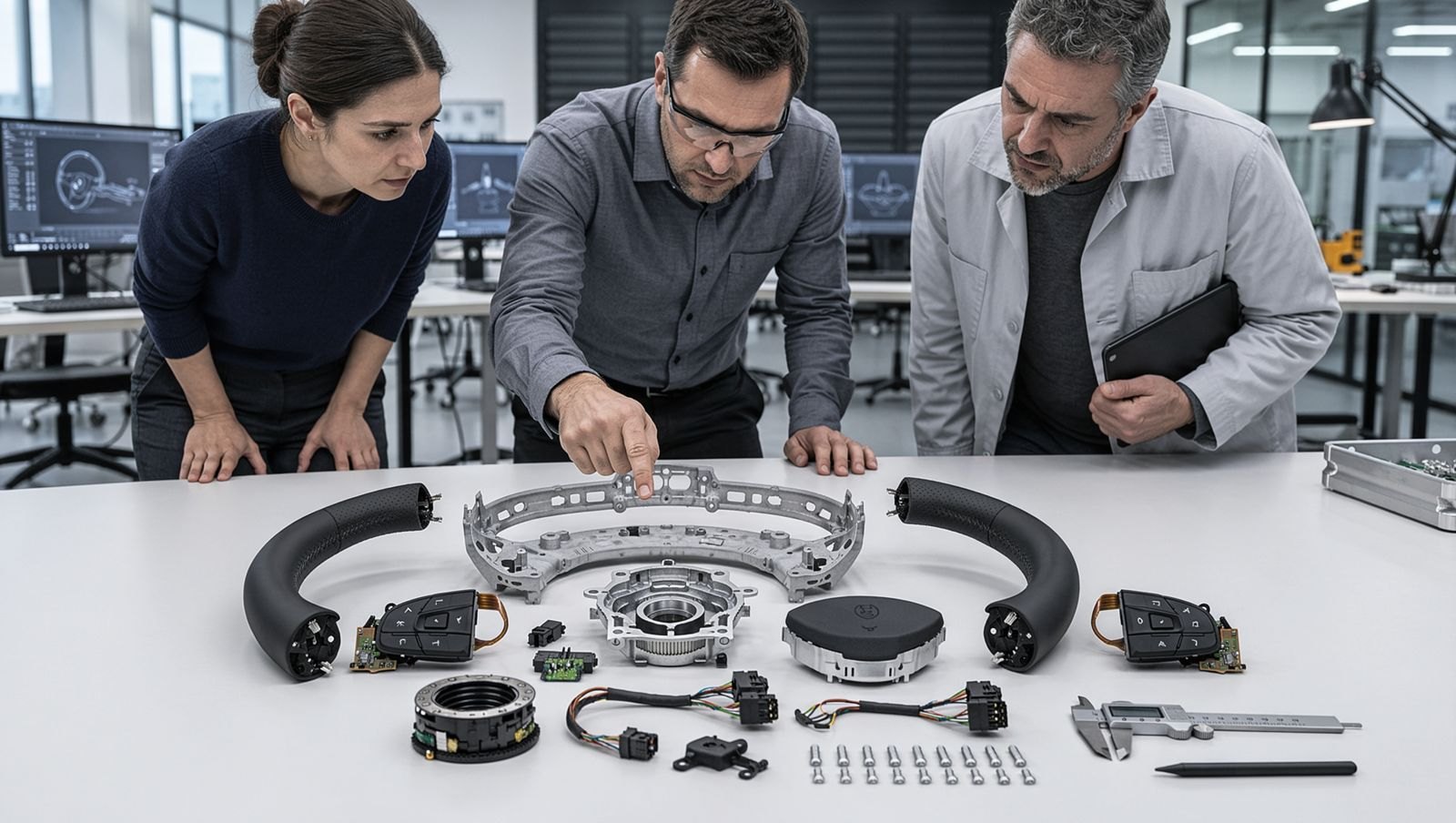
The outcome was very different. The design study cut the steering wheel’s product cost by 46%. The process study cut manufacturing process cost by 37%.
The team had not suddenly become more capable. They had been capable all along. What changed was how the study was run.
What changed: the method, in its totality
The difference was the proper Job Plan, the structured approach of the Value Methodology, followed in full.
It is very common for internal studies to shorten the process. Under time pressure, teams move quickly to the part that feels productive: generating ideas. Information gathering is brief. Function analysis is skipped or treated as a formality. The study becomes a well-organised brainstorm about where cost can be reduced.
That approach finds the obvious savings, which is roughly what this team had found. A few percent, from the places everyone already knew to look.
The Job Plan works differently because each phase prepares the next. The team gathers the facts properly, so everyone starts from the same understanding. Function analysis asks what each part and each step actually has to do, and what is being spent to do it. Only then does the team generate ideas, and by that point it is looking in places it would never have looked before. Evaluation and development then turn those ideas into proposals that can stand up to scrutiny.
None of these steps is complicated. But they only work together. When a study skips or rushes them, it loses most of what makes the method powerful.
“Already optimised” usually means “already looked at”
When an organisation tells me a product is already optimised, I take it seriously, but I have learned to ask a second question: optimised by what process?
Often the honest answer is that the product has been reviewed many times, by capable people, using the same approach each time. That approach keeps leading to the same small set of ideas. The product is not optimised. It has simply been looked at from the same angle, again and again.
The structured method changes the angle. It moves the team away from “what can we cut?” and towards “what does this need to do, and what is the best way to do it?” That shift is where the larger savings come from.
What this means for your organisation
This study taught us something that applies well beyond automotive. Organisations often assume that when results are disappointing, they need different people or more expertise. Sometimes that is true. But very often, the knowledge to find far greater value is already inside the organisation. It just has not been given the right structure.
If your internal studies are finding a few percent, it is worth asking whether they are following the Job Plan in full, or a shortened version of it.
For us, this was a great experience, mostly because of what it showed the team itself. The value had been in their hands from the start.
If your product is “already optimised” and you would like a second look, talk to us about a value study.